In this post I want to explore the fundamental idea behind Pratilom Dhyana/Meditation, and in the next posts I can discuss the how-to. It goes something like this.
The fundamental realisation of all spirituality is that our inmost Self, deep down, far, far in, beyond senses, mind, intellect, opinions and prejudices or any bodily identification, is one with the Supreme Self, the Self of all, the Absolute, the immutable, the transcendental, universal and beyond space and time yet immanent.
This state of the union is the precise meaning of the word ‘yoga’: to yoke, to join, to merge. This is often depicted by the imagery of a drop merging with the rest of the water and expanding to the whole by a rippling action. So it’s not losing oneself but more like forging, merging, and expanding.
This is beautifully expressed by the Vedic parable of two birds. It talks about shifting of identity from a limited self that experiences the state of duality and experiences of pleasure and pain to identifying with the Supreme Self, One who’s the source of all delight.
And this shifting of identity is the essence of the word Pratilom. ‘Pratilom’ literally means ‘converse’, ‘to inverse’, or ‘to change the relationship’.
The parable is as follows; this particular version is from the Mundaka Upanishad: (There’s also a version in the Rig Veda which goes into more detail.)
द्वा सुपर्णा सयुजा सखाया समानं वृक्षं परिषस्वजाते।
तयोरन्य: पिप्पलं स्वाद्वत्त्यनश्नन्नन्यो अभिचाकशीति॥
समाने वृक्षे पुरुषों निमग्नोऽनाशया शोचति मुह्यमान:।
जुष्टं यदा पश्यत्यन्यमीशमस्य महिमानमिति वीतशोक:॥
यदा पश्य: पश्यते रुक्मवर्णं कर्तारमीशं पुरुषं ब्रह्मयोनिम्।
तदा विद्वान्पुण्यपापे विधूय निरंजन: परमं साम्यमुपैति॥
“Two birds, beautiful of wings, close companions, cling to one common tree: of the two one eats the sweet fruit of the tree, the other eats not but watches his fellow. The soul is the bird that sits immersed on the common tree; but because he is not lord he is bewildered and has sorrow. But when he sees that others who is the Lord and the beloved, he knows that all is His greatness and his sorrow passes away from him. When, a seer, he sees the Golden-hued, the maker, the Lord, the Spirit who is the source of Brahman, then he becomes the knower and shakes from his wings sin and virtue; pure of all stain he reaches the supreme identity.” (translated by Sri Aurobindo)
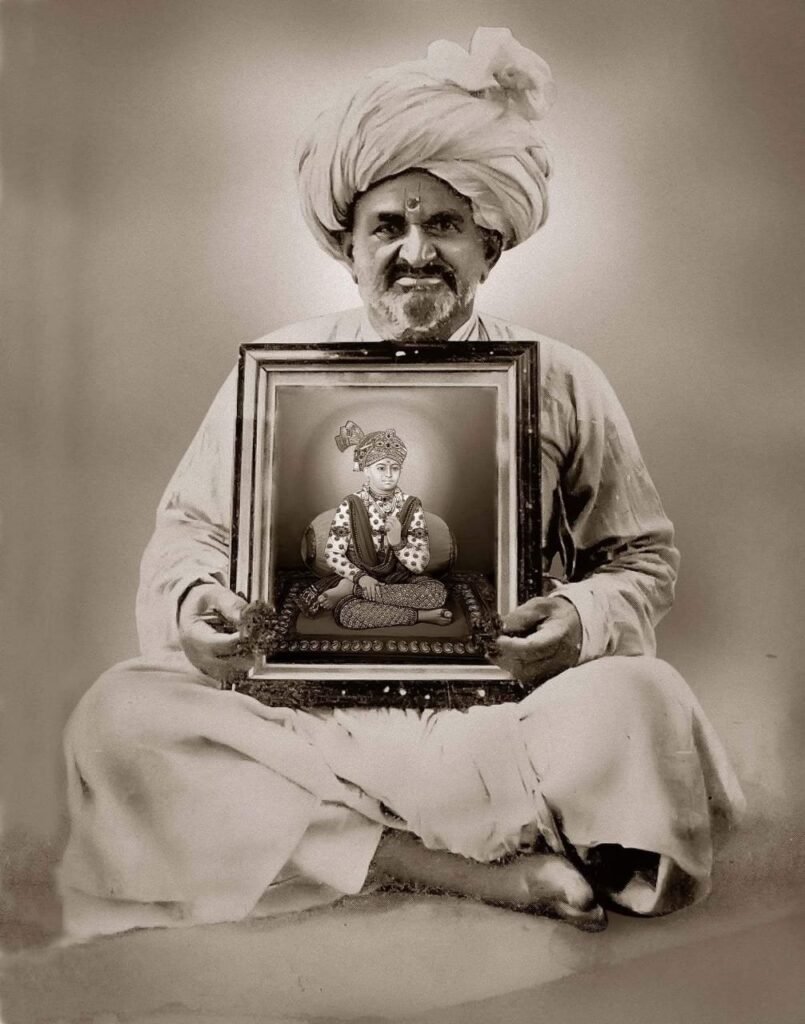
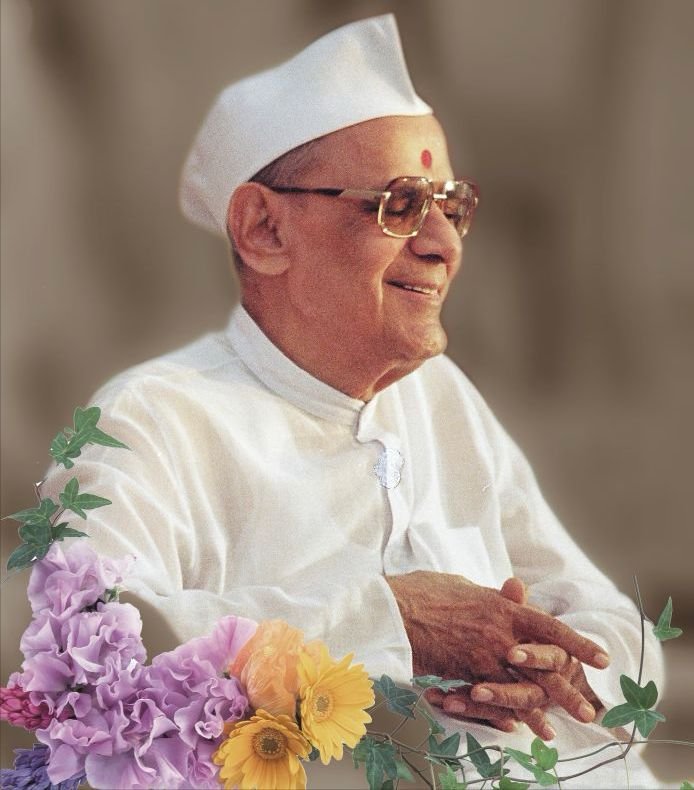
The word “Pratilom” (and also the meditation method called Pratilom Dhyana) and its lost essence were revived and brought into the limelight by Abajibapashri of Kutch and Shri Narayanbhai G. Thakker (Narayanmama, the founder of Swaminarayan Divine Mission), and I’m writing this article to pay homage and express my heartfelt gratitude toward them for sharing their teachings with the world without any reserve or expectation.
Both of these exalted beings dwelt incessantly in a state of Supreme Bliss and Oneness with not just the impersonal and all-pervasive aspect of Divine but also His/Its Supreme Personality (the Purushottama, the Parabrahman, and the Neti Neti, called the source of Brahman in the above Upanishadic verses), even while engaged in their daily worldly obligations and routines.
In Pratilom Dhyana we focus on that shifting of identity from the limited Ego Self to Oneness with the Supreme Self.
The process although one integral process can be explained in two stages for the sake of intellectual satisfaction.
At first when a person starts meditating, the individual experiences himself as the mediator mediating on the object but as the experience deepens or the love for this Divine or this inner Self increases the mediator and the object of meditation become One. The experiences of oneness or non duality is the first stage.
The second stage is when the inner Self or Divine takes over completely and becomes the doer of all actions. Then the individual — in a mannerism of speaking — no longer dwells in the body but becomes one with the Lord, the Beloved, lives beyond space and time in the Divine Form or Self Existence while experiencing immense Bliss and omnipresence. Then such a seer has nothing more to gain for he embodies the Upanishadic maxim “yasmin vijñāte sarvam idaṁ vijñātaṁ bhavati” (translation “Knowing this One things All is Known”)
This is also empathised in the following verse of Bhagavad Gita:
yoginām api sarveṣhāṁ mad-gatenāntar-ātmanā
śhraddhāvān bhajate yo māṁ sa me yuktatamo mataḥ
Of all Yogins he who with all his inner self ever absorbed in Me, for Me has love and faith, him I hold to be the most united with Me in Yoga.
—Bhagavad Gita 6.47
This is the quintessence and fulfilment of all Yoga. All other practices, whether physical poses (Asana), breath control (Pranayama) or the psychic powers (siddhis), etc., are relative achievements and like chaff compared to grain.
P.S. I am planning on translating and uploading Shri Narayanmama’s sermon on Pratilom Dhyana, for that reason I’m not discusising the method in much detail!
Leave a Reply
You must be logged in to post a comment.